A six-minute tribute to some of the moments, people and stories that 'brought us together' this year, from tragic to triumphant, challenging or inspiring. Here's to 2013.
Posts mit dem Label 2013 werden angezeigt. Alle Posts anzeigen
Posts mit dem Label 2013 werden angezeigt. Alle Posts anzeigen
1/06/2014
2013: The Web in Review (or: What brought us together)
A six-minute tribute to some of the moments, people and stories that 'brought us together' this year, from tragic to triumphant, challenging or inspiring. Here's to 2013.

12/30/2013
Symantec Predictions for the New Year 2014: The secret to predicting the future is to listen for the whisper
As 2013 draws to the end, at the same time there is a lot of discussion about what 2014 will bring about Internet Security.
It's interesting to look into the glass ball and try to guess on what may be (up)coming in the year 2014. In the world of technical an informated security, predictions can provide insights into what the globe is worried about and in what spaces businesses, small or big ones, individuals and groups are willing to spend money into. If done right, predictions might be very helpful in taking decisions about how best to invest into security and at the same moment to prevent Data breaches
Predictions for example, include that the volume of mobile malware on smartphones & tablets, will increase, that there will be more attacks against critical framework, and the number of state-sponsored attacks and Cybercrime will grow. Some appear fruitless, such as those claiming a arbitrarily trend will continue. But some questions reappear every year:
Will the good ones start winning against the bad ones?
Have we learned our lessons of the ending year ?
Will Security increase or decrease ?
Now Symantec, in a blogpost, throws their subjectious analyzing Predictions, into the Web Security Business, also with looking back what highlight 2013 came up with: The NSA and all about spying etc.
 |
| Origin Nice Wallpaper though |
Predictions for example, include that the volume of mobile malware on smartphones & tablets, will increase, that there will be more attacks against critical framework, and the number of state-sponsored attacks and Cybercrime will grow. Some appear fruitless, such as those claiming a arbitrarily trend will continue. But some questions reappear every year:
Will the good ones start winning against the bad ones?
Have we learned our lessons of the ending year ?
Will Security increase or decrease ?
Now Symantec, in a blogpost, throws their subjectious analyzing Predictions, into the Web Security Business, also with looking back what highlight 2013 came up with: The NSA and all about spying etc.
- People will finally begin taking active steps to keep their information private
- Scammers, data collectors and cybercriminals will not ignore any social network, no matter how “niche” or obscure
- The “Internet of Things” becomes the “Internet of Vulnerabilities.”
- Mobile apps will prove that you can like yourself too much
People will finally begin taking active steps to keep their information private
Privacy issues have littered the headlines in 2013, delivering a wake-up call to people and businesses about the amount of personal information we share and that is collected every day, every hour, every trading minute, by everyone, from your doctor to your social network, from your last gasfilling attempt up to paying your parking space in a pakinglot. You can expect to see privacy protection as a feature in new and existing products.
Then, beyond 2014, we’ll be arguing on whether or not these features actually provide any privacy protection. Expect Tor, which enables online anonymity, to become a popular application across the spectrum of Internet users.
You’ll also see a resurgence of users adopting pseudonyms on social networking sites to protect their privacy. And you know who is going to lead the way on this ? Teens !
They do care about privacy. And not just where their parents are concerned. Given this, more people will move to new, upstart and niche social networking sites, in an attempt to hang with their friends in obscurity. Which leads to the next prediction…
- Scammers, data collectors and cybercriminals will not ignore any social network, no matter how “niche” or obscure
It’s tempting to believe that you can move to a new neighborhood and all your old problems will go away. They don’t in real life and they won’t when it comes to social networking.
Any new social network that attracts users will also attract scammers and miscreants. Users who feel it’s just them and their friends on these new sites are in for a big (and unpleasant) surprise. Your mom won’t be there to remind you: If something sounds too good to be true, it almost certainly is a scam (and that is what the FBI is trying to remind users, over and over again (IC3)). Protect yourself by using security best practices no matter where you are on the Internet, or how you connect to it.
- The “Internet of Things” becomes the “Internet of Vulnerabilities”
You can expect dull things will get bold in 2014.
With millions of devices connected to the World Wide Web in 2014, they will become attracted for the "Bad Guys".
Security analysts have already demonstrated attacks against smart televisions, medical apparatus and security cameras. Already we’ve seen baby monitors attacked and traffic was shut down on a major tunnel in Israel, reportedly due to hackers accessing computer systems through a "secure" camera system.
Major software dealers have figured out how to notify customers and get patches for vulnerabilities to them, in their own confidentially situation. The companies, and even single small plugin-builders, creating gadgets (i.e. like these) that connect to the Internet don’t even realize they have an oncoming security problem.
These systems are not only vulnerable to an attack – they also lack notification methods for consumers and businesses when vulnerabilities are discovered.
Even worse, they don’t have a friendly end-user method to patch these new vulnerabilities. Given this, we are going to see new threats in ways in which we’ve never seen before.
- Mobile apps will prove that you can like yourself too much
People (generally) trust those they sleep with, so it should not be surprising that with 48 percent of people sleeping with their smart phones, they are lulled into a (false) sense of security about them.
In 2013, it was reported on a mobile app that would secure additional “likes” for your postings on Instagram. All you had to do was hand over your login and password to some (bad) guy(s) in Russia. More than 100.000 people saw nothing wrong with that.
We trust (to much). Our mobile devices and the wonderful applications that run on them to make our lives more simle, we just. TRUST ! Period.
We suspend our belief, for that device that sits in our pocket, lays under our pillow, in oue purse or even a One Night Stand. The "bad" guys are going to take advantage of this big time in 2014 and beyond. The world will not stop turning after.
So, there you have them, Symantec predictions for 2014. Of course, the best part of trying to predict the future is being surprised by the unforeseen and the unimaginable. All in all, what’s will be certain is, that we'll be listening for all the new whispers to see what 2015 will bring. And not only ME ! Lets wish the best. Together ! Happy New year.
11/19/2013
Google & Microsoft announce to combat together against Online Child Porn
Google and Microsoft announced today (November 18th 2013) that they will introduce new software controls aimed at reducing the distribution of child pornography online. Eric Schmidt, Executive Chairman of Google, announced today that the Multi-Business-Concern Google in Cooperation with MS will roll out new Control(ed)-Software designed to curb child porn searches on the Google Searchengine(s).

In a joint announcement, both Companies have introduced on the British summit on Internet safety 2013, a software that makes it harder for Pedophiles, Sadists and wannabe`s to search for child abuse material online.


Writing ahead of that British summit on Internet safety, Google's executive chairman Eric Schmidt said his company has fine-tuned Google Search to clean up results for over 100.000 search terms in connection to child porn. When users (Pedophiles) type in queries that may be related to child sexual abuse, they will find no results that link to illegal content.
(My opinion: If this would be possible (and not only a trying promise), this would be one of the biggest breakthrough(s) in this disturbing and growing Internetcrime(s), that "kills" Children emotionally, for the rest of their lives, if they come away without killing after an sexual raping act).
Schmidt wrote in the Daily Mail newspaper: "We will soon roll out these changes in more than 150 languages, so the impact will be truly global". Globalization ?
The restrictions are being launched in the United Kingdom and other English-speaking countries first and similar changes are being brought out on Microsoft's Bing search engine (Where is YAHOO ?). The two companies are sharing picture detection technology to identify child abuse photographs whenever they appear on their systems, and Google is also testing technology to identify and remove illegal videos.

Other measures include warnings shown at the top of Google search for more than 13.000 queries to make it clear that child abuse is not only illegal but a crime indescribable. Schmidt acknowledged that no algorithm is perfect and Google cannot prevent pedophiles adding new images to the web. Maybe someday they will be able, on the long run. Campaigners welcomed the move but doubted how much impact the changes would bring. Pedophiles tend to share images away from the public search engines, they say...
Jim Gamble, the former chief of Britain's Child Exploitation and Online Protection Center said: "They don't go on to Google to search for images, they go on to the dark corners of the Internet on peer-to-peer websites."

Jim Gamble
According to a briefing issued by Mr. Cameron's office, changes to be introduced by the search engines include, but not limited :
- The introduction of new algorithms that will block child abuse images, videos and pathways that lead to illegal content, covering 100.000 unique searches on Google (Worldwide).
- Stopping auto-complete features from offering people (...with Pedophilia disorder...), child abuse search terms.
- Google as well as Microsoft will now work with the National Crime Agency and the Internet Watch Foundation to bring forward a plan to tackle peer to peer networks featuring child abuse images.
- Google will bring forward new technology that will put a unique identification mark on illegal child abuse videos, which will mean all copies are removed from the web once a single copy is identified or uploaded.
OTHER LINKS TO THIS TOPIC:
- http://www.telegraph.co.uk/news/uknews/10457458/Google-New-technology-to-identify-child-abuse.html
- http://www.fbi.gov/stats-services/publications/parent-guide
- https://www.gov.uk/government/news/internet-safety-summit-at-downing-street-communique
- http://www.theguardian.com/technology/2013/nov/18/uk-us-dark-web-online-child-abuse-internet
In a joint announcement, both Companies have introduced on the British summit on Internet safety 2013, a software that makes it harder for Pedophiles, Sadists and wannabe`s to search for child abuse material online.


Writing ahead of that British summit on Internet safety, Google's executive chairman Eric Schmidt said his company has fine-tuned Google Search to clean up results for over 100.000 search terms in connection to child porn. When users (Pedophiles) type in queries that may be related to child sexual abuse, they will find no results that link to illegal content.
(My opinion: If this would be possible (and not only a trying promise), this would be one of the biggest breakthrough(s) in this disturbing and growing Internetcrime(s), that "kills" Children emotionally, for the rest of their lives, if they come away without killing after an sexual raping act).
Schmidt wrote in the Daily Mail newspaper: "We will soon roll out these changes in more than 150 languages, so the impact will be truly global". Globalization ?
The restrictions are being launched in the United Kingdom and other English-speaking countries first and similar changes are being brought out on Microsoft's Bing search engine (Where is YAHOO ?). The two companies are sharing picture detection technology to identify child abuse photographs whenever they appear on their systems, and Google is also testing technology to identify and remove illegal videos.
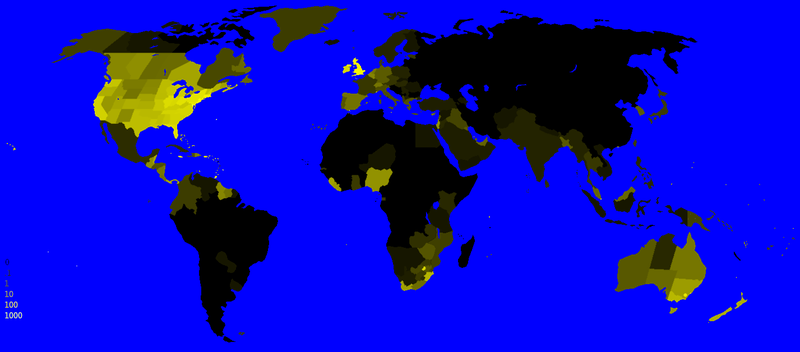
Other measures include warnings shown at the top of Google search for more than 13.000 queries to make it clear that child abuse is not only illegal but a crime indescribable. Schmidt acknowledged that no algorithm is perfect and Google cannot prevent pedophiles adding new images to the web. Maybe someday they will be able, on the long run. Campaigners welcomed the move but doubted how much impact the changes would bring. Pedophiles tend to share images away from the public search engines, they say...
Jim Gamble, the former chief of Britain's Child Exploitation and Online Protection Center said: "They don't go on to Google to search for images, they go on to the dark corners of the Internet on peer-to-peer websites."

Jim Gamble
According to a briefing issued by Mr. Cameron's office, changes to be introduced by the search engines include, but not limited :
- The introduction of new algorithms that will block child abuse images, videos and pathways that lead to illegal content, covering 100.000 unique searches on Google (Worldwide).
- Stopping auto-complete features from offering people (...with Pedophilia disorder...), child abuse search terms.
- Google as well as Microsoft will now work with the National Crime Agency and the Internet Watch Foundation to bring forward a plan to tackle peer to peer networks featuring child abuse images.
- Google will bring forward new technology that will put a unique identification mark on illegal child abuse videos, which will mean all copies are removed from the web once a single copy is identified or uploaded.
OTHER LINKS TO THIS TOPIC:
- http://www.telegraph.co.uk/news/uknews/10457458/Google-New-technology-to-identify-child-abuse.html
- http://www.fbi.gov/stats-services/publications/parent-guide
- https://www.gov.uk/government/news/internet-safety-summit-at-downing-street-communique
- http://www.theguardian.com/technology/2013/nov/18/uk-us-dark-web-online-child-abuse-internet
Abonnieren
Posts (Atom)