Translate

Posts mit dem Label Cyber Attack werden angezeigt. Alle Posts anzeigen

3/31/2014

NEW MEXICO:

Albuquerque Police Website HACKED by ANONYMOUS seems to come
as "revenge" to a recent Albuquerque Police Shooting
that left a homeless man dead

The Albuquerque police website is back online after authorities say a cyberattack took it down for hours.

APD Website: http://www.cabq.gov/police/

The department has not been reached for comment on Sunday evening, but announced earlier in the day that the site was breached. It was visible late Sunday afternoon after going down in the early afternoon. Police spokesman Simon Drobik said that the Server downtime was due to a cyberattac.


The attack comes days after a YouTube video emerged threatening retaliation for a recent police shooting that left a homeless man dead. The video that bore the logo of the computer hacking collective Anonymous warned of a cyberattack on city websites and called for a protest march.

Hundreds of protesters were marching Sunday to protest recent police shootings.

SEE THE VIDEO HERE:


A department spokesperson said the attack happened around 11 oclock Sunday morning. As part of the attack, the personal information of high-ranking police officials was released.

On Twitter, a group called "Anonymous" took credit for crashing the site. The group released a video last week that said APD murdered James Boyd in cold blood.

The group tweeted the home addresses of several police officials.

APD said Sunday's cyber threat has not affected public safety communications, so response services are OK. The police department's Facebook and Twitter accounts are also down. APD disabled them in anticipation of a cyber-attack.

Anonymous is also taking credit for crashing the city of Albuquerque's website. A city spokesperson said the website was down for about five minutes.

Source: AP

1/16/2014

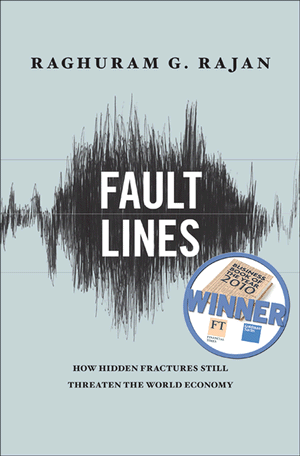
VIDEO - Faulty Lines ? Controlling the Web: A Documentary looks at the fight for the Absolute Control of the World Wide Web (2012 - Before Snowden)

"In January 2012, two controversial pieces of legislation were making their way through the US Congress. SOPA, the Stop Online Piracy Act, and PIPA, the Protect Intellectual Property Act, were meant to crack down on the illegal sharing of digital media. The bills were drafted on request of the content industry, Hollywood studios and major record labels.


The online community rose up against the US government to speak out against SOPA, and the anti-online piracy bill was effectively killed off after the largest online protest in US history. But it was only one win in a long battle between US authorities and online users over internet regulation. SOPA and PIPA were just the latest in a long line of anti-piracy legislation US politicians have passed since the 1990s.

"One of the things we are seeing which is a by-product of the digital age is, frankly, it's much easier to steal and to profit from the hard work of others," says Michael O'Leary, the executive vice-president for global policy at the Motion Picture Association of America (MPAA).

The US government says it must be able to fight against piracy and cyber attacks. And that means imposing more restrictions online. But proposed legislation could seriously curb freedom of speech and privacy, threatening the internet as we know it.

Can and should the internet be controlled? Who gets that power? How far will the US government go to gain power over the web? And will this mean the end of a free and global internet?

Fault Lines looks at the fight for control of the web, life in the digital age and the threat to cyber freedom, asking if US authorities are increasingly trying to regulate user freedoms in the name of national and economic security."

 Take a look (on) yourself:

12/27/2013

After TARGET Data Breach: There is a Need to target on Web Security

As multinational banks as other financial institutes struggle to protect clients after a massive data breach at retail giant Target, small service companies also should be concerned about their Online Security. Its just not tough enough to be protected in a secure way, as Online Fraud is increasing every year in a more and more faster way.


Between November 27th and December 15th, cybercriminals hurried off with data from 40 million credit and debit card accounts of people who shopped regulary at Target’s 1.924 stores in the United States and in Canada.

So far, at least three class-action lawsuits have been filed.

The U.S. Small Business Administration says cyber threats are an issue for everyone, and small businesses are becoming more common targets for such threats and crimes because they often have fewer preventive or responsive resources, as being or getting protected in a competent way also increases the costs. But Security start with yourself.

USSBA Seal
The USSBA though offers in its latest online training course some of the Basics in: “What is cybersecurity?”. (See Link at the end of this post beneath)

With the help of technology and best practices, cybersecurity is the effort to pro-tect computers, programs, networks and data from fraudulent Attacks. Or to ask in other words:

Why is cybersecurity important ?


Consider all the information you have that needs to be secure, like personal information for employees, Businesspartner information, sensitive information for consumers, and also sensitive and secret business information.

It’s essential to do your part to keep these details safe and out of the hands of those who could use your data to compromise you and everything surrounding your business.

CNN reported, that nearly half of the data breaches that Verizon has recorded in 2012, took place in companies Staff with less than one thousand. Symantec reports show that 31 % of all Cyberattacks in 2012 happened to businesses that had less than 250 employees. In 2011 Attacks were rising up to 81 percent.

The Methods


The Range of ways getting compromised is Vast. This Range might vary between Web site tampering, data breach, DoS up to Malware and Trojans.

Website tampering is a form of Web-based attack in which certain parameters in the Uniform Resource Locator (URL) or Web page form field data entered by a user are changed without the Webmasters authorization. This finally directs the browser to a link, page or site other than the one the user intended (although it may look exactly the same to the usual client).

Parameter tampering can be employed by Cybercriminals and identity thieves to stealthily obtain personal or business information about the user. Countermeasures specific to the prevention of parameter tampering involve the validation of all parameters to ensure that they conform to standards concerning minimum and maximum allowable length, allowable numeric range, allowable character sequences and patterns, whether or not the parameter is actually required to conduct the transaction in question, and whether or not null is allowed.

A denial-of-service attack DoS happens on a CPU or Web site and locks the computer and/or crashes the system, resulting in stopped or slowed work flow.

Malware code and/or viruses are sent over the Internet and aim to find and send your files, find and delete critical data, or block your computer or system. They can hide in programs or documents and make copies of themselves  without your knowledge.

What Prevention measures YOU should take

The main first step secureing the critical information of your business, is to create a far-reaching firm security policy. Second Step: keep them up-to-date. Third Step: convincing your employees to keep the proprieties according to the policies.

  • Be ensured that your computer hardware and software are updated regularly. 
  • Change passwords periodically and use firewalls to protect your systems. 
  • You should back up your data on a regular basis so that if something is compromised, you have a secure copy.

If interested, the following Link brings you to the Small Business Learning Center at www.sba.gov and will take 30 Minutes:

Click to Start Your Course now !

12/14/2013

Security Breach: Former French First Lady Carla Bruni Nude Pictures
allow hackers into G20 delegates' computers

Nude pictures of former French first lady Carla Bruni were used to break into the computer systems of dozens of diplomats. The shocking security breach was first discovered at the G20 summit in Paris in February 2011 and may be ongoing.


                                          Carla Bruni & Sarkozy     Photo: AP
“To see naked pictures of Carla Bruni click here” said a message sent to those attending, zhat included finance ministers and central bank representatives.

Bruni, a former supermodel who became President Nicolas Sarkozy’s third wife in 2008, was well known for taking her clothes off in her early career. This prompted many to open an attachment which turned out to be a ‘Trojan’ with an embedded virus, although all recipients could see were the X-rated photographs.

                                                                     Reuters
Once accessed, the Malware infected the computers of senior officials as well as forwarding the offensive email on to other numbers stored on device.

“Almost everybody who received the email took the bait,” said a government source in Paris, saying that this included representatives from the Czech Republic, Portugal, Bulgaria, Hungary and Latvia.

Sarkozy was first embarrassed by nude pictures of Bruni surfacing shortly after their marriage, while they were staying with the Queen at Windsor Castle during a state visit to Britain. (e.g. ROFL)

Bruni, who still uses her maiden name in her career as a pop singer, later changed her image from a Paris sex kitten into a unassuming politician’s wife. The so-called phishing attacks are thought to have originated in China and were aimed at extracting information.

The attacks are still being investigated, and nobody is yet sure what information was distilled.

The United States is thought to have been the main target of the scam.

The cyber attack on the Paris G20 summit took place before the 6th G20 summit in Cannes, in the south of France, which involved big heads of governments. There have been a number of similar attacks in France, leading the country to be proactive in cyber defence.

                         Getty Images
A recent White Paper on Defence and National Security proclaimed cyber attacks as “one of the main threats to the national territory” and “made prevention and reaction to cyber attacks a major priority in the organisation of national security”.

This led to the creation of the French Agency for National Security of Information Systems in 2009. Nicolas Sarkozy, a conservative, lost the presidential election to the Socialist Francois Hollande in 2012 and is now dealing with a range of corruption charges.

12/04/2013

REVIEW 2013: Members of the LulzSec Hacker Club Sentenced to Prison Terms

LulzSec Logo
British members of the LulzSec Blackhat Hacker Club were sentenced for a series of global cyber-attacks in 2011. Two of the "Hacktivists" have received prison terms, one will be sent to a young offenders’ institution and another received a suspended sentence.

Ryan Ackroyd, Jake Davis, Mustafa Bassam and Ryan Cleary had all pleaded guilty to hacking offenses prior to sentencing at the Southwark Crown Court on Thursday.

Cleary, 21, who also pleaded guilty to possession of images showing child abuse, was sentenced to 32 months, of which he will serve half. He also pleaded guilty to hacking and multiple counts of launching cyber-attacks against organizations, including the CIA and the UK’s Serious Organized Crime Agency (SOCA), as well as hacking into US Air Force computers at the Pentagon.

From left to right: Cleary, Ackroyd, Bassam, Davis

Ackroyd, 26, who used the online persona of a 16-year-old girl named Kayla, was sentenced to a 30 month sentence of which he is expected to serve 15 months. The former soldier pleaded guilty to one charge of conducting an unauthorized act to hinder the operation of a computer, contrary to the Criminal Law Act 1977.

Davis, 20, was sentenced to two years in a young offenders’ institute for hacking and cyber-attack related offenses. He was also reportedly in charge of media relations for LulzSec.

Jake Davis
Bassam, 18, was still in school when the attacks were carried out and was handed down a 20 month sentence which was suspended for two years, as well as 300 hours of community service. The judge presiding over the case  is said to have taken Bassam's age into account when deciding to give him a suspended sentence.

Lulzsec, whose name is a combination of the acronym Lol - laugh out loud - and security, emerged as a splinter group from the hacking collective Anonymous two years ago. However, unlike Anonymous, the group appeared to be less motivated by politics.

In many of the attacks, the gang of "modern day pirates" stole a high amount of personal information, including Passwords, Emails and credit card details, which they later posted on the LulzSec website and file-sharing sites. They also carried out distributed denial of service (DDoS) attacks on many victims' Websites, causing them to crash. The FBI, News International, Nintendo and Sony were among many of the other high-profile targets the group targeted in their spree.

Sandip Patel
"It's clear from the evidence that they intended to achieve extensive national and international notoriety and publicity," the UK Independent cites Prosecutor Sandip Patel. "They saw themselves as latter-day pirates."

He added: "This is not about young immature men messing about. They are at the cutting edge of a contemporary and emerging species of criminal offender known as a cyber-criminal."


Hector Monsegur
LulzSec was only in operation for several months in 2011 before the main members were arrested between June and September of 2011, the court heard. In that brief period of time, they managed to attract a huge international audience, attracting 355.000 Twitter followers by July of that year.

Their arrests came after the group's apparent leader, Hector Monsegur – known online as "Sabu" – turned informant after being caught by the FBI.

Source: rt.com

SEE ALSO: The Sealed Indictment

11/29/2013

Two Singaporean arrested for Hacking Singapor's Presidential Website

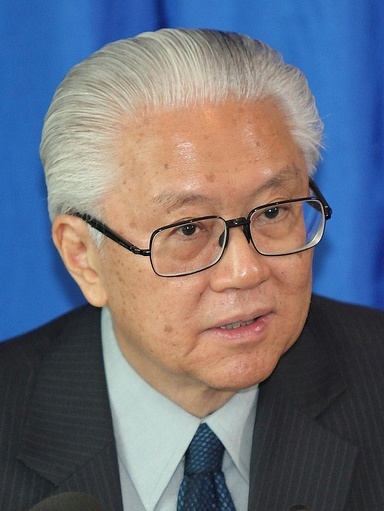
Two Singaporean men have been arrested for allegedly defacing Singapor's president Tony Tan Website during a recent rash of Cyber Attacks in the city-state, police said on Thursday.


The men, aged 17 and 42, were arrested following a complaint lodged by the Website administrators of the Istana, the official residence of President Tony Tan.

Tony Tan

The Website was hacked and displayed a crude image in the early hours of November 8, about an hour after Prime Minister Lee Hsien Loong's website displayed mocking messages and pictures from activist hackers' group Anonymous. Police said the two attacks are unrelated to each other.

Lee Hsien Loong
The suspects in the Istana Website hacking will be charged in court on Friday, November 29th 2013, for offences under the city-state's Computer Misuse and Cybersecurity Act.

They face a maximum fine of Sg$10 000 or imprisonment of up to three years, or both.

Police did not reveal the identity of the two suspects, but Singaporean businessman Doolson Moo last week revealed to
The Straits Times newspaper, that he was the one who penetrated the Istana Website to “test for vulnerabilities”.

The 42-year-old said he entered a line of computer code into the search box on the website that allowed him to display a picture of an old woman pointing her middle finger, along with a string of offensive words in the southern Chinese dialect of Hokkien.

He told the newspaper that his accomplice was a 17-year-old student he knew through social networking site Facebook.

Guy Fawkes Mask
The arrests on Thursday came after another Singaporean, 35-year-old James Raj, was charged in court on November 12th 2013 with hacking a municipal council's Website and posting an image of a Guy Fawkes mask, the international symbol of Anonymous.

The council is located in a district represented by the prime minister.

A man claiming to speak for Anonymous has demanded that Singapore scrap a law requiring news websites to obtain annual licences.

The new Internet licensing rules came into force in June 2013 and have angered bloggers and activists who say they are designed to cover free expression.

Singapore strictly regulates the traditional media, but insists the new licensing rules do not have an impact on Internet freedom.